Posts

A Last Chance to Blog for 2014
Image
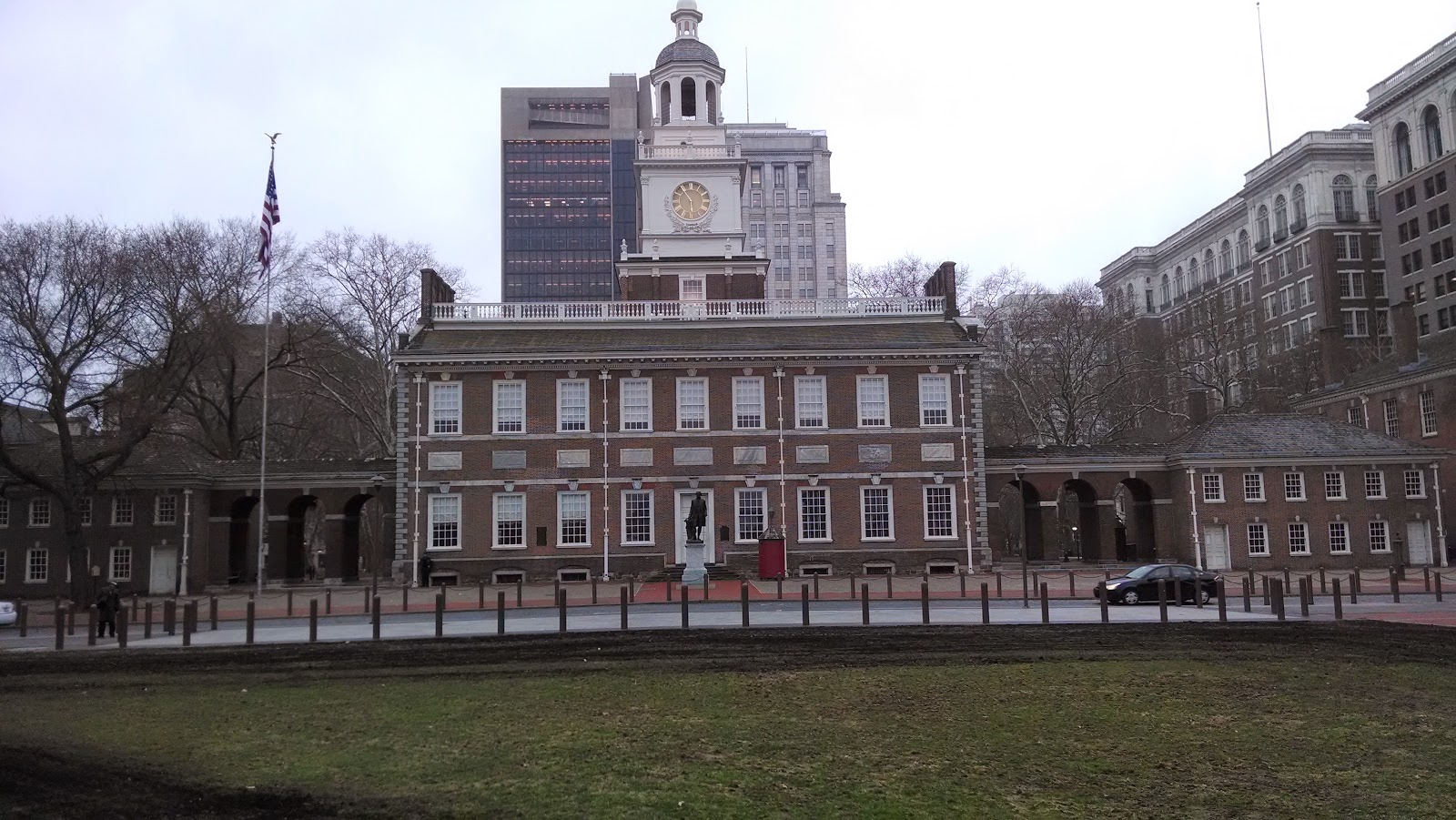
To say I don't blog much here would be an understatement, but I'd feel bad if 2014 came and went without a single new post. After all, not many people can say they've been maintaining the same blog for 14 years. When I think back at the past year my mind goes to academic conferences. In April I made a 10-day trip, first to the AERA Annual Meeting in Philadelphia and then straight to New Orleans for the NCTM Annual Meeting. I listed all the sessions I attended over at blog.mathed.net . Philadelphia New Orleans In June I traveled to Madison for a Cyberlearning Summit. The main research project I've worked on is funded by NSF's Cyberlearning program and this conference gave me a chance to see the work of similar projects from around the country. That trip also gave me a chance to spend some time in and around my home state, something I've only done 3 or 4 times since I moved to Colorado more than 10 years ago. It's always fun to travel acr...

2012 Year in Review

Image
My 2012 looked similar to my 2011 - a lot of reading, writing, studying, and teaching. Throw in a bunch of running and a pretty miserable Cubs season and the year came and went pretty quickly. I traveled back to Iowa for the first time in four years, giving me a chance to visit old friends and help my parents a bit. However, if my 2012 is highlighted by anything, I think it comes down to three things: experiencing some great speakers here at CU-Boulder, passing my comprehensive exams, and not only setting, but reaching, a running goal. Great Speakers You know what else is great about all these tickets? I think I spent a total of $2 on them. I'll remember 2012 for the outstanding speakers I got to see in person. First was Neil deGrasse Tyson, speaking at Macky Auditorium  in February. In a talk called "The Delusions of Space Enthusiasts," Tyson, in a most entertaining way, talked about how we doubt our power to innovate, how we look too much at the past of the sp...

Mt. Meeker

Image
After a summer of running and a couple trips to Rocky Mountain National Park, I felt like I was ready to climb Mt. Meeker. I didn't want to climb it alone, but luckily one of our new doctoral students, Elizabeth Schlessman, wanted to climb Meeker, too. Knowing the peak of fall weather was at hand, we set out on a beautiful Saturday to see if we could summit Longs's nearest neighbor. Elizabeth and I hit the trail around 6:30 and steadily moved above the trees and got the classic view of Meeker and Longs. This is really a wonderful place, and getting there was far easier than I remembered it from my climb of Longs in 2000. Then again, this time I was in shape, accustomed to the altitude, and not carrying 45 pounds of camping gear. Meeker on the left, Longs on the right, and Ships Prow in the center. Our route (the Loft Route) climbs the gully left of the Prow. I couldn't have imagined better weather for this day. Not too hot, or cool, or windy, and practically no risk ...

Ali Bernard, Lolo Jones, and the Women of the London Olympics

Coming into the Olympics , I had a hunch that these games were going to be remembered for the performances of the U.S. women. Maybe it had something to do with the local media attention on Missy Franklin , or my native state 's attention on Gabby Douglas and Lolo Jones , but it seemed there was a lot more talk about our female Olympians than there was for the men. ( Michael Phelps  is the obvious exception. Remember, NBC thought it was worth skipping part of the Opening Ceremony so we could listen to Ryan Seacrest ask him about his fear of spiders.) Now through 13 days of competition, it appears my hunch was right . U.S. women have so far won 51 medals to the men's 38 (neither figure counting the bronze won in tennis mixed doubles), and the women have struck gold twice as often as the men , 26 to 13. Give yourself this quiz: Name a male U.S. Olympic gold medalist who isn't a swimmer . (crickets) Give up? It's not easy, because there have only been three: Vincent Han...

St. Vrain Mountain

Image
After a month or so spent getting my running legs solidly underneath me, I figured it was finally time to head west into the mountains and climb something. After looking at destinations relatively close to Boulder, I chose St. Vrain Mountain, a peak located on the border of Rocky Mountain National Park and the Indian Peaks Wilderness. It's always nice to start a hike by knowing, for sure, that you're on the trail you think you should be on. While St. Vrain isn't that far from Boulder as the crow flies, getting there meant driving northwest to Lyons and then southwest to Allenspark. Thankfully, the gravel road south out of Allenspark was in great shape and it wasn't far to the trailhead. I was a little surprised at the lack of trail register, and that made me think that maybe this trail gets used less than I thought. I started hiking around 8:20 on good trail and was soon in the Indian Peaks Wilderness. It's not far from the trailhead to the boundary of the I...

Scott Carpenter, Aurora 7, and Boulder

Image
Scott Carpenter (photo NASA) Fifty years ago today, astronaut Scott Carpenter became the second American to orbit the earth. The 1960s were a busy time for our space program, so the 2010s are going to be a busy time for 50-year space achievement anniversaries. I've been a bit of a space junkie ever since I was a young boy with my Kmart telescope and Space Shuttle models. My very first "Do you remember where you were..." moment was the Challenger disaster , and even when NASA wasn't in the spotlight I was getting up in the middle of the night to watch Shuttle launches and landings. One of the perks of being a student at CU-Boulder is the university's history of producing astronauts (20 at current count, which I believe is more than any institution other than the military academies) and our strong involvement in building space craft and experiments (we're the top NASA-funded university in the world). There's a great  exhibit in the CU Heritage Muse...

My Podcast Predilection

I think my main modus operandi is to interact with as much information as possible. I read for school, keep track of a couple hundred news feeds in Google Reader, watch documenaries, and follow really smart people on social networks who share good things. It's a full-time job, and I love it. Now that the semester is over, I can try to stay more up-to-date with a growing number of podcasts I follow. Being a PhD student is a very immersive experience, but podcasts are one way I keep myself stretched in more than just one direction. Here's a list of what I watch or listen to on a regular basis: TWiT.tv : I keep up with a ton of technology news and debate by following Leo Laporte and others on his podcasting network. Here are the podcasts I prefer to watch: This Week in Tech  (This is roughly the tech equivalent of "Meet the Press," but far, far less formal) Tech News Today  (Today's their 500th show, and I'm sure I've never missed one) Security Now  (St...

2011 Year in Review

It would be easy to oversimplify the past year. After all, most people would find the life of a full-time graduate student to be relatively dull: reading, attending class, reading, writing, reading, teaching, and reading. Maybe I'm exaggerating the amount of reading I've done, but maybe I'm not -- I added up the cost of all the books I ordered from Amazon in 2011 and came up with a total of just short of $1200. And that doesn't include all the pages from journal articles, blogs, and other websites that I've read. But it's not just about reading. It's about engaging with ideas, and therein lies many of my favorite moments of the year: time spent with fellow students and professors, talking and debating. There are pros and cons to the cohort system in the School of Education at CU-Boulder, but when your cohort-mates are as good as mine, it's a plus. So special thanks to (in no particular order) Ben, Sara, Alaina, Ashley, Katie, Clara, Karla, Ryan, Anton...

162

I'm sitting myself down tonight after a long baseball season to watch the Cubs for the final time this year. After Ron Santo died last winter, this season I decided to upgrade myself from MLB.com's Gameday Audio to the full MLB.tv package so I'd have access to every Cubs TV broadcast this year. I watched every one . I might not have watched them live, and for quite a number the game became background noise as I worked on something else, but in one way or another I've watched every single game this season. It's not quite like getting season tickets and attending every home game, or like visiting all 30 major league ballparks, but it's something. I certainly didn't pick a memorable Cubs season to watch. Early in the season, an injury-riddled Cubs lineup proved that they were a pretty poor team. Later, when they got healthy, the best they could do was still pretty average. There were way too many blown saves and about a billion men left on base. I know the ...

Why Eleanor Roosevelt Would Have Liked Google+

Image
And why Google+ won't be replacing Twitter or Facebook for most of us anytime soon "Great minds discuss ideas. Average minds discuss events. Small minds discuss people." -- Eleanor Roosevelt I know too much already has been written about Google+ and its place in the world of social networking, but I've recently developed a new perspective which might help some of you who are trying to decide how and when to use Google+ versus Twitter or Facebook. Eleanor might have said "small minds discuss people," but there's more than one way to discuss people and none of us are consistently small-minded. People are important, and the people who are most important to us are those with which we have mutual friendships or family relationships. This is why Facebook is best at people : it enforces (if we ignore fan pages) a symmetric follower model, ensuring that we are connected to people who want to also be connected to us. Those connections, often with people wh...

Fall Semester, 2011

Tomorrow I begin my second year in the doctoral program in the School of Education at the University of Colorado at Boulder. Being a doctoral student isn't quite like being a student at any other level. Doctoral work is more of an apprenticeship, although there are plenty of classes to attend and papers to write. I imagine there are a number of qualities our faculty look for in us doctoral students. During our first year, they see if we can grasp the fundamental methods of quantitative and qualitative research, and they test our understanding of the major political and philosophical issues in our field. During our third year, we'll take a comprehensive exam to measure if we have the focused expertise and vision necessary to go on to pursue work towards a dissertation that will contribute new knowledge to the field. So what do they look for in our second year? If my schedule is any indication, they must be seeing if we can maintain our sanity despite heavy workloads. I hope I...